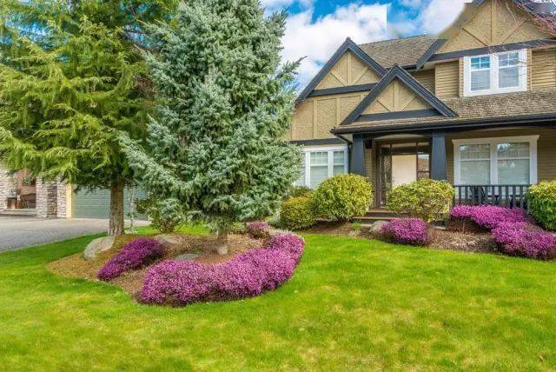
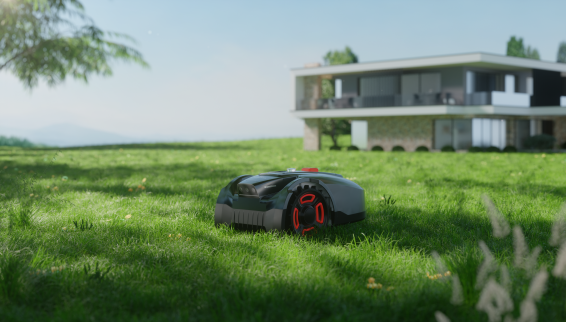
If your lawn stretches beyond an acre, you've probably already discovered that most "robot mowers" on the market weren't built for your yard. They lose their way around irregular boundaries, drain their batteries before the job's half done, or struggle the moment the terrain tilts uphill. Large properties demand an entirely different engineering approach. The critical technologies that separate a mower that survives your lawn from one that thrives on it include GPS-guided robotic mower systems, RTK positioning accuracy, multi-zone mowing technology, and serious battery stamina.
RTK-GPS Navigation: The Core Positioning Technology for Large Lawn Mowers
Precision is the entire game here. A standard GNSS chip, the kind found in budget robotic mowers, locates itself within 1 to 3 meters. That's fine for a small backyard. On an acre-plus property, a 3-meter margin of error means your mower drifts across flower beds, misses strips of grass, or double-cuts the same patch three times. RTK positioning lawn mower technology closes that gap dramatically, pushing accuracy down to 1–2 cm under open-sky conditions. Some manufacturers describe it as 1–3 cm or roughly one inch.
How RTK Achieves Centimeter-Level Accuracy
RTK reads carrier-phase signals and pairs them with real-time correction data streamed from a fixed base station. Once the system resolves what's called "integer ambiguity," it locks into fix status. That's the moment true centimeter accuracy kicks in. Before that, it sits in float status, where precision can slip to decimeter-level or worse.
Distance matters too. Most setups maintain high accuracy within 20 km of the base station, though some technical references extend that to 35 km before degradation becomes noticeable. The base station's own coordinates need to be precisely known as well. Garbage in, garbage out applies here.
Why This Matters for Large, Open Lawns
An acre equals roughly 4,047 square meters. At that scale, an AI-powered lawn mower navigation system needs to hold a consistent coordinate reference across long straight passes and parallel stripes. That's exactly what RTK delivers. Open lawns favor RTK over buried boundary wires, since there's no risk of cable breaks or drift.
Tree cover, tall buildings, and narrow side yards can knock the system from fix to float, causing hesitant turns or crooked stripes. Smart setups build in a safety buffer of a few centimeters to over a decimeter inside virtual boundaries to absorb these occasional drifts.
Boundary-Wire-Free Technology: App Wireless Mapping vs Traditional Signal Wire
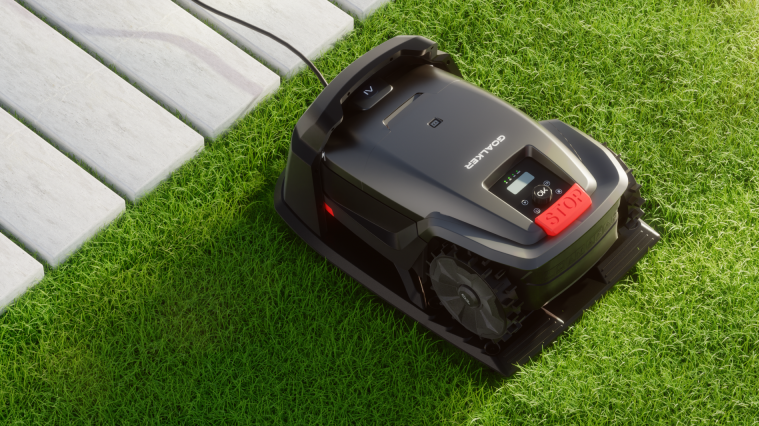
Digging trenches for boundary wire used to be the only way to fence in a robotic mower. That's changed. Modern GPS-guided robotic mower systems let you draw the entire lawn boundary through an app, no shovel required.
How Wireless Mapping Works
Take Husqvarna's approach. You download the app, bind the mower, set up a reference station, then walk the lawn's edge using a "remote steer" or "appdrive" function while the app drops boundary points as you go. Once that's done, you can layer in stay-out zones around flower beds or tree wells, plus set transport paths and mowing schedules. The whole process takes 30 to 90 minutes — some users report finishing in under an hour. Compare that to traditional boundary wire, which often takes several hours to several days depending on lawn size and complexity.
Why This Matters More on Large, Irregular Lawns
Wireless mowers handle 3,000 to 6,000 square meters, running 150 to 180 minutes per cycle, with Cutting widths around 350mm and slope tolerance up to 45% (24°). The real advantage shows up when you need to change something. Redrawing a map in the app takes minutes. Re-burying wire takes a weekend.
Feature | Wireless App Mapping | Boundary Wire |
|---|---|---|
Setup time | 30–90 min | Hours to days |
Editing boundaries | Instant, in-app | Requires re-digging |
Best for | Complex, changing lawns | Simple, fixed layouts |
Entry price | $700–$1,500 | Typically lower |
Mid-range price | $1,500–$3,000 | — |
High-end price | $3,500+ | — |
When Traditional Wire Still Makes Sense
If your lawn is rectangular, has few obstacles, and won't change layout anytime soon, boundary wire remains a practical, budget-friendly option. It's cheaper upfront, and maintenance is straightforward — mostly just checking for cable breaks. But the calculus shifts fast on large properties. The bigger and more irregular your lawn, the more labor and long-term maintenance traditional wire demands. The dividing line is whether your lawn is complex enough, and changes often enough, to justify going wireless.
Multi-Zone Management: How Multi-Zone Technology Handles Complex Large Lawns
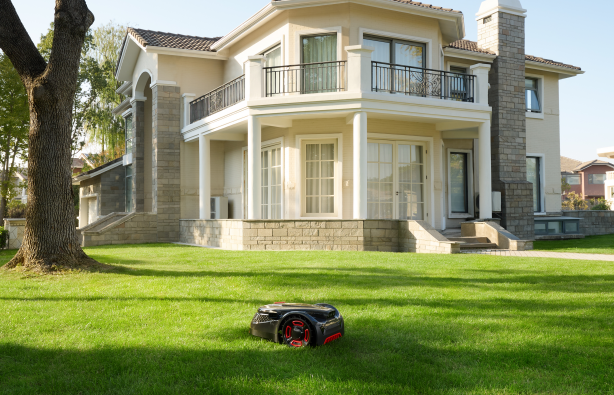
Large lawns rarely come in one clean shape. Front yards, back yards, side strips, and isolated garden islands all behave differently, and multi-zone mowing technology exists to handle that mess. The app splits your property into named zones like front, back, or side path, and assigns each one its own runtime.
Allocating Time by Area
A common split gives an 800 m² main zone paired with a 200 m² secondary zone roughly an 80/20 time ratio. Shaded, slow-growing sections get less runtime. Sunny zones with faster growth get more. You can also vary cutting direction and start points per zone, which cuts down on wheel ruts and keeps growth patterns even.
Connecting Separated Areas
For wire-based systems, zones split by a driveway or garden bed typically stay linked through a narrow connecting corridor at least 2 feet (about 0.6 m) wide, kept clear of sharp turns. If two lawn sections have zero physical connection, manually relocating the mower and loading a saved zone map remains the standard workaround.
No-Mow Zones for Protection
Ponds, flower beds, play equipment, and construction materials call for no-mow zones buffered generously rather than mapped tight to the physical edge, protecting tires and blades alike.
Large-Capacity Batteries and Fast-Charging Tech: The Key to Large-Lawn Mowing Efficiency
Battery specs make or break a large-lawn setup faster than any other single factor. A mower can navigate perfectly and still fail your acre-plus lawn if it dies halfway through the job.
Runtime by Platform
Robotic mower battery life for large areas varies a lot depending on the platform:
40V systems: 30–40 minutes runtime, fine for small lots
60V systems: 45–50 minutes
80V systems: about 60 minutes, covering up to half an acre
56V dual-battery mowers: two 5.0Ah packs deliver up to 80 minutes total, edging closer to what continuous large-lawn work demands
Robotic mowers: high-end models stretch to 150–250 minutes per cycle
For riding on 1 acre or more, single-battery push mowers usually need a mid-job swap or recharge. Dual-battery or multi-battery systems handle that scale much better. Some riding mowers stack six 56V lithium packs to claim coverage up to 1.5 acres.
Charging Speed Determines Real Usable Time
Lithium batteries charge in 2–4 hours, versus 8–16 hours for lead-acid. But the real metric is charge time relative to runtime. A 5.0Ah pack charging in about 50 minutes to support an 80-minute runtime keeps your mower working, not waiting. Some modern battery systems reach 90% charge in about 30 minutes.
The buying rule: aim for runtime at or above 60 minutes with charge time under 60 minutes. If charging exceeds two hours, you'll need spare batteries — otherwise your actual mowing time utilization drops sharply.
Automatic Recharge + Resume
Battery capacity solves half the equation. The other half is what happens when the mower runs low mid-job on a lawn too big to finish in one charge. Automatic recharge and resume technology splits your acre-plus property into a chain of "charge, then continue" cycles instead of demanding one uninterrupted run.
How Resume Logic Works
When battery drops below a set threshold, or rain interrupts the cycle, the mower saves its task progress — completed path segments, finished zones, remaining area — and heads back to the dock. Once charged past the set threshold, it picks up exactly where it left off. Many systems tie resume permission to a minimum charge level, often around 30%, before allowing continued work off the dock.
Real-World Numbers
One retail model runs 60 minutes per charge, covering roughly 720 square feet hourly, with a 0.4-acre maximum coverage area. On multi-zone lawns, this cuts manual intervention — no carrying the mower between sections or restarting jobs by hand.
Where It Breaks Down
Common failure points include dirty charging contacts, blocked dock approaches, and base station repositioning without remapping. Better systems combine RTK, Visual markers, and inertial sensors to reduce docking misalignment on large properties.
Obstacle Avoidance Sensors: A Comparison of Obstacle Avoidance Sensor Technologies
Not every sensor "sees" your lawn the same way. Four core technologies handle robotic mower obstacle detection, and each trades off cost against accuracy differently.
The Four Approaches
Camera vision AI: identifies what an object is: pets, toys, garden tools, people. Strong at classification, weaker in low light or backlit conditions. Usually paired with radar or depth sensors for redundancy.
LiDAR: measures where and what shape, giving best-in-class 3D mapping for complex, obstacle-dense lawns. Safety-certified 2D LiDAR units cost between $1,500 and $5,000, and full AMR-grade systems reach $12,000.
Ultrasonic: detects presence within a few meters, cheap and light-insensitive, but struggles with thin poles, soft objects, and low-lying items.
Physical bumper sensors: contact-triggered with near-zero detection distance, offering minimal protection for pets or flower beds. They are a last-resort safety net.
Matching Sensors to Lawn Complexity
Obstacle Type | Best Sensor Fit |
|---|---|
Trees, thick posts | Ultrasonic, LiDAR, or vision |
Toys, pets, furniture | Vision AI or LiDAR |
Thin branches, low objects | Vision AI or LiDAR (ultrasonic often misses these) |
Reflective/transparent items | Camera + ultrasonic, or LiDAR + vision combo |
For simple, obstacle-light lawns, ultrasonic suffices. For lawns with pets, kids' toys, or dense trees, LiDAR or camera-AI combinations justify the higher cost.
Slope Handling & Traction Control: Grade Adaptation Technology
Torque numbers tell you more about robotic mower slope handling than horsepower ever will. A 350W–500W motor covers general-purpose climbing, but steeper terrain pushes requirements toward 2000W-class systems. Power demand doesn't scale gently. A 10% grade requires more than double the power a 5% grade needs.
Torque Thresholds by Slope
50Nm+: minimum for moderately steep ground
60Nm: stable, consistent climbing
80Nm+: 8%+ grades or heavier loads
Reading the Angle vs. Percentage
Manufacturers mix units, so confusion is common. 20% grade equals roughly 11.3°. 35% equals about 19.3°. 45% equals 24.2°. Once you cross 30°, traction becomes genuinely risky — expect wheel slip without proper control systems.
Precision incline sensors detect the climb and auto-boost torque instantly, keeping speed stable across rolling terrain. Larger wheel diameter and grippy tread clear roots and ruts across the full terrain, not only the slope itself.
App Remote Control and Firmware Updates: Smart Management System
Hardware only gets you halfway there. The app layer is what lets you manage an acre-plus property without walking the whole perimeter every time something needs adjusting.
Core App Functions Worth Checking
A serious app should offer:
Remote control: power on/off, mode switching, parameter tuning, and single-unit or grouped commands if you're running multiple mowers across zones
Zone-based settings: assign different mowing policies to different sections of your property instead of one blanket setting for the whole lawn
Scheduling: recurring cycles by day or week, useful for aligning mowing with growth rates in sunny versus shaded areas
Map editing: drag-and-drop placement of alerts, boundaries, and obstacle markers directly on the visual map
Alert flagging: issues pin to the map location, so troubleshooting doesn't require guesswork
Why OTA Firmware Updates Matter
Over-the-air updates eliminate on-site maintenance visits. New features, bug fixes, and security patches push wirelessly, extending the mower's usable lifespan without a technician showing up.
Good OTA systems require the device online at release time, support staged rollouts to limit risk, and include failure rollback if an update goes wrong. Some mowers reboot multiple times after flashing firmware - that's normal, not a malfunction.
For large properties running multiple units, check whether the platform supports fleet-wide OTA, not just single-device updates.
Weather Awareness & Security: Environmental Sensing and Safety Protection Technology
Wet grass wrecks more than your mowing schedule. It tears blade tips, spreads disease, compacts soil, and strains the motor. Most robotic mowers now carry rain sensors that pause the task and send the unit back to dock the moment moisture crosses a threshold. Wait 2–5 hours after light drizzle, and a full 24 hours after heavy rain. Without a sensor, walk the lawn — wet soles or damp palms after touching a blade means it's still too soon.
Security matters just as much on unattended acreage. A PIN lock stops unauthorized use and triggers an alarm if lifted or left idle 30 seconds without input. GPS tracking won't stop theft, but it locates a stolen unit fast. GeoFencing adds real-time alerts the moment the mower crosses its virtual boundary — critical for open, overnight-parked properties. Combine PIN + alarm + GPS + GeoFence for the strongest protection; any single layer alone leaves gaps.
Wired vs. Wireless Navigation Systems: Key Comparisons for Large Lawns
Price tags tell only half the story here. Wired systems typically run $600–$1,200, cheap on hardware but requiring cable installation along every boundary edge. Outsource that dig-and-bury job, and add several hundred dollars more. Wireless systems using RTK-GPS or GPS+AI vision cost $1,500–$4,000+ upfront, but skip the trenching entirely.
Five-Way Comparison
Install cost: Wire wins on hardware price, loses on labor. Wireless flips that equation.
Precision: Wire holds a fixed, physical boundary — consistent edges every time. Wireless hits 1–3 cm accuracy under open sky, but degrades near trees or buildings.
Flexibility: Reshaping a wired lawn means redigging cable. Wireless just redraws the zone in-app.
Maintenance: Wire demands checking for cable breaks and buried-line decay. Wireless shifts maintenance toward sensors, base stations, and signal conditions — less physical labor overall.
Best fit: Wire suits shaded, obstacle-heavy, budget-constrained lawns. Wireless suits large, open lawns with boundaries that change often.
The Decision Rule
If first-purchase budget matters most, choose wire. If long-term layout freedom matters most — adding zones, reshaping beds, expanding paths — wireless pays off over time, especially on open acreage where RTK precision and straight-line efficiency actually show up in mowing quality.
Priority Checklist for Choosing a Robot Mower for Large Lawns
Seven things separate a mower that lasts on your acreage from one that dies in week two. Work through them in this order, and you'll cut through the marketing noise fast.
The Priority Order
Coverage area first. Match the "max coverage" spec against your actual lawn size, then add a 10% buffer for complex terrain. Runtime across the market runs from 40 to 240 minutes, covering anywhere from a few hundred to several thousand square meters. If the mower isn't big enough here, eliminate it. Nothing else matters yet.
Slope capability second. Most RTK mowers handle around a 45% grade. Premium units hit 60–80%. Pick a rating above your steepest measured slope, not right at it.
RTK + virtual map accuracy third. RTK pushes positioning from meter-level down to 2–5 cm. You need that precision for boundary-free operation and reliable path planning.
Multi-zone support fourth. Configurations range from 5, 6, or 8 zones up to 80 or even 100. More zones mean better handling of front and back yards, side strips, and isolated green islands.
Obstacle avoidance fifth. Prioritize AI vision, ToF, or LiDAR combinations over raw cutting width. Trees, pets, and narrow paths make sensor quality more decisive than blade span.
App stability sixth. Make sure the app supports virtual boundaries, No-go zones, zone editing, resume-after-interruption, and reconnection handling. Weak Wi-Fi or Bluetooth interference kills real-world performance fast.
Common Buying Mistakes
Chasing wide cutting decks while ignoring navigation precision. Width means nothing if the mower re-cuts or skips patches.
Trusting nominal area specs without factoring in zones, shade, and slope length. Reserve a 10–20% margin.
Judging slope only by percentage, not by continuous length. Long inclines strain traction far more than short ones.
Frequently Asked Questions (FAQ)
Three questions come up over and over from large-lawn owners weighing this purchase. Here's the straight answer to each.
How large does my lawn need to be before RTK positioning becomes necessary?
RTK mowers typically start justifying their cost around 1,000 m², and the advantage grows sharply past 1,500 m². Commercial-grade units already cover 1.25 to 2 acres, with high-end models stretching to 10–15 acres. If your property is open, path-heavy, and approaching that 1,500 m² mark, RTK's centimeter-level accuracy pays for itself in fewer missed strips.
Will the battery survive a full mowing cycle on an acre-plus lawn?
Most units run 1–4 hours per charge, recharging in 1–3 hours, with large-lawn batteries often exceeding 4,000 mAh. Don't expect one charge to finish everything — the system is designed around automatic recharge-and-resume, not marathon single sessions. Commercial models covering 1.25 to 6 acres rely on exactly this segmented approach. Expect battery lifespan of 2–4 years or 300–500 charge cycles, shorter with daily heavy use.
Are wireless, boundary-free mowers actually stable on large properties?
Yes, provided setup conditions are right: strong signal coverage, an open site, and accurate initial mapping. RTK favors large, open lawns with straighter, more efficient paths, while LiDAR fits smaller, obstacle-dense yards better. Commercial wireless models already cover up to 6 acres reliably — stability follows careful setup, not luck.