Your robot mower is gliding across the lawn when your dog suddenly darts into its path, or your toddler’s toy truck appears out of nowhere near the flower bed. Will it stop in time, or are you looking at a costly (possibly heartbreaking) accident? This worry keeps many pet and parent households from switching to automated mowing.
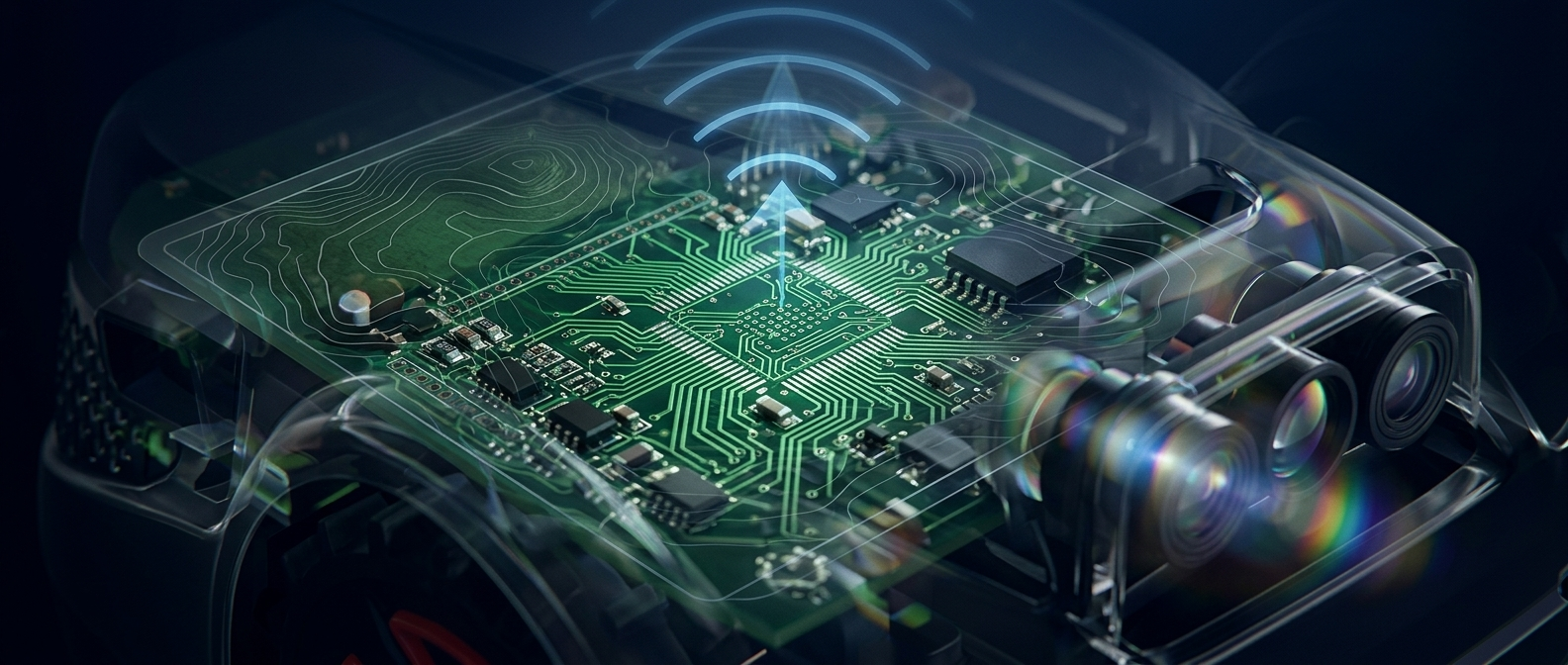
Today’s robot mower sensor technology has come a long way from simple bump-and-turn mechanisms. Modern machines combine ultrasonic sensors, AI camera vision, and even RTK-GPS mapping to detect and avoid obstacles with impressive precision—often before they get close enough to touch. We break down how each detection method works, which ones perform best in real-world conditions, and what to look for if you want a mower that keeps your entire yard (furry friends included) safe.
How Robot Lawn Mowers Detect Obstacles: The Core Sensor Technologies
Most robot mowers use a layered sensor system. Each layer catches what the previous one might miss.
Bump Sensor Robot Mower: The Last Line of Defense
A bump sensor robot mower works on contact-trigger logic. The machine physically touches an obstacle before the front bumper or floating chassis shifts, sending a stop signal. When it hits something, the blades stop instantly, the mower reverses, turns, reroutes, and resumes mowing after a brief pause. This method requires physical contact, so it's a last-resort safety net. It detects obstacles only by bumping into them. Entry-level models often use a single front bumper strip as their primary detection method.
Ultrasonic Sensor Lawn Mower: The Active Detection Standard
An ultrasonic sensor lawn mower measures distance using time-of-flight between an emitted pulse and its echo. A common layout places three sensors in a triangle, angled at -30°, 0°, and +30° in front. In prototype testing with HC-SR04 units calibrated between 0.1–2.5m, distance error stayed within ≤1.5cm. Engineering guidelines often flag anything within 15cm as an immediate threat requiring a turn, with 220kHz closed-top transducers performing reliably around the 20cm range. Blind zones vary widely by hardware, with some modules detecting as close as 3cm and others only becoming reliable beyond 60cm.
Ultrasonic sensors struggle with objects approaching at angles greater than 30°, with roughly 5% miss rates on tilted approaches. Soft, thin, or sound-absorbing objects (like garden hoses or small toys) produce weaker echoes than rigid, flat surfaces, so detection is less consistent for these shapes.
AI Camera Vision: The Smartest Way Robot Mowers Avoid Obstacles
Distance readings only tell part of the story. You also need to know what's in front of the mower, not just how far away it is. Camera vision fills that gap. Husqvarna's AI vision system continuously monitors the area ahead, detecting objects in real time and using that data to slow down, reroute, or stop entirely before contact ever happens.
Object Recognition: Telling Trees Apart from Toys and Pets
The mower captures images and runs them through an AI model that classifies exactly what it's looking at. Navimow's Vision system identifies obstacle types and builds an environmental map as it goes.
The category list has grown fast:
- Sunseeker S4 claims recognition of over 360 obstacle types, including garden furniture, toys, pets, and people.
- Segway Navimow's animal-avoidance system distinguishes 13 animal species: cats, dogs, chickens, sheep, rabbits, birds, foxes, deer, and hedgehogs.
Once a static obstacle is confirmed, the blade stops, the mower reroutes around it, and mowing resumes on a new path, no collision required. In internal testing, Navimow's animal-avoidance accuracy hit 95% for hedgehogs and over 85% for cats and dogs.
Working in the Dark: Camera Plus Infrared
Adding infrared (IR) sensors to AI vision makes 24/7 operation realistic. Husqvarna describes its AI Vision + IR combo as reliable "day and night, even in low light conditions." Sunseeker's X9 series pushes further, using IR to spot hidden animals and detect static, moving, and low-profile obstacles in dim settings. Pure camera vision alone struggles with harsh shadows and glare, which is why most low-light setups lean on IR or LiDAR/ToF as backup.
Why AI Vision Beats Reactive Sensors
Traditional ultrasonic or bump sensors react after something is nearly touched. Camera-based robot mowers classify first, then decide — separating trees, walls, pets, and people to set permanent no-go zones or dynamic detours. Segway's fused Vision + Point Cloud system can spot an animal within 5 meters, replan a route in 10 milliseconds, and maintain at least 1 meter of clearance throughout.
The tradeoff is cost. Vision systems demand heavier computing, more training data (RoboUP's models draw on millions of collected datasets), and often pricier hardware, which is why AI Vision Technology shows up as a standalone selling point on premium listings.
RTK-GPS and LiDAR Navigation: Reducing Collisions Through Smart Mapping
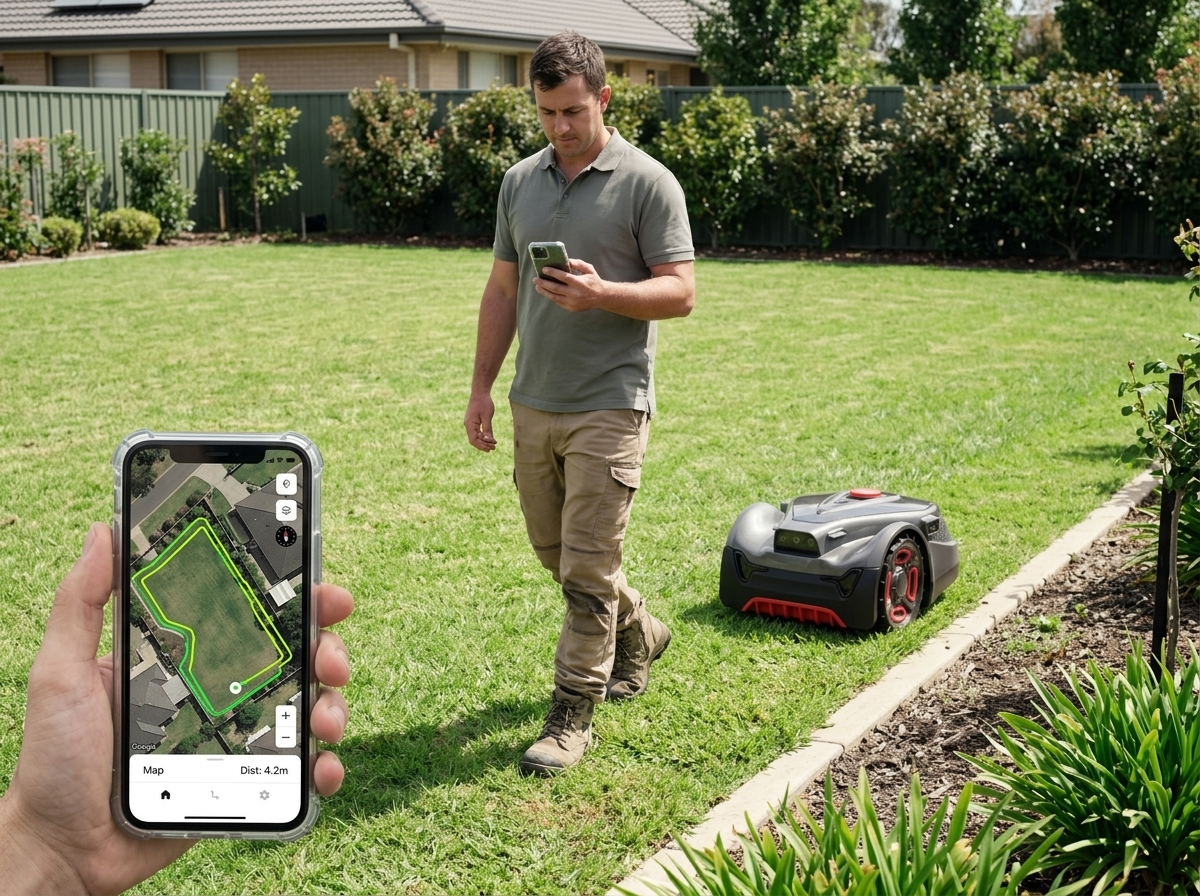
Standard GPS puts you within 1-3 meters of your actual location. A mower needs far tighter precision to stay out of your rose bushes. RTK-GPS robot lawn mower systems deliver accuracy down to 1-2 cm horizontally under good conditions. Some high-end setups claim even tighter tolerances, citing 8-10mm plus 1 ppm horizontal accuracy. This level of precision keeps the mower within a few centimeters of its planned path, every single pass.
How RTK-GPS Prevents Collisions
Centimeter-level positioning means less overlap between mowing passes and better repeatability. Modern multi-frequency receivers lock onto RTK signals in seconds to under a minute, so the mower knows its position shortly after startup. This precision is critical at field boundaries and tight turns, where collisions with fences, trees, or garden edging are most likely.
Why RTK Alone Isn't Enough
RTK-GPS handles global positioning, but it does not see what is on your lawn right now. LiDAR covers the immediate area, building a real-time 3D point cloud that detects trees, rocks, equipment, and people regardless of lighting conditions.
The two technologies cover different ground.
RTK-GPS defines the planned route and boundary lines.
LiDAR scans the corridor ahead for unexpected obstacles.
The controller reroutes or stops when LiDAR's map intersects the RTK path.
Obstacle locations get logged for smarter future routing.
In obstructed yards with trees, sheds, or irregular layouts, this RTK+LiDAR pairing is becoming the practical standard. RTK anchors the big picture while LiDAR catches what is happening in the last few meters.
Sensor Comparison: Which Obstacle Detection Method Works Best
No single sensor works best in every yard. Pick the wrong one for your terrain, and you get missed obstacles or false alarms that slow down mowing.
Head-to-Head: Cost, Accuracy, and Weather Resistance
Sensor Type | Best For | Accuracy | Weather Performance | Price Tier |
|---|---|---|---|---|
Ultrasonic | Entry-level, simple yards | Reliable within a few meters | Struggles with sound-absorbing surfaces | Lowest cost |
LiDAR | Complex layouts, precise mapping | ~85.92% detection accuracy in comparative studies | Strong in low light, weaker in heavy rain | Mid-to-high |
Radar | Nighttime, fog, dust, rain | Solid but slower update cycles on fast-moving objects | Best all-weather performer | Mid-to-high |
Research on small fixed platforms found ultrasonic range too limited for reliable standalone use, while laser rangefinders gave longer range but a narrower field of view. In testing, radar outperformed laser rangefinders, which outperformed ultrasonic.
Why Fusion Beats Any Single Sensor
Robot mower navigation systems no longer pick just one sensor. The dominant combinations in engineering literature are Camera-LiDAR, Camera-Radar, and Camera-LiDAR-Radar setups. No single sensor covers range, object detail, and weather resistance at the same time, so these systems combine multiple types.
The typical division of labor looks like this:
Ultrasonic handles close-range blind spots
LiDAR delivers geometric precision
Radar manages fog, rain, and moving targets
Cameras provide semantic recognition (telling a rock apart from a sleeping cat)
Lowest cost points to ultrasonic, geometric precision to LiDAR, all-weather reliability to radar. For yards with irregular obstacles or nighttime mowing needs, layered LiDAR-radar-vision fusion is becoming the practical standard.
Can Robot Mowers Avoid Pets, Kids, and Small Objects?
Robot mowers can avoid larger moving targets, but reliability drops for anything low, still, or tiny. Safety standard EN 50636-2-107 requires the obstruction sensors to stay active in automatic mode, detecting a person or obstacle through contact or non-contact means. A German VDE notice confirms the standard was amended to include a test using a kneeling child's foot.
What Modern Systems Actually Catch
Some AI mowers now claim recognition of 300+ object types, covering people, pets, children's toys, hoses, and furniture. Multi-sensor platforms combining 3 cameras with 7 ultrasonic radars spot a person or animal before contact, then slow, stop, or steer around them.
Where the Gaps Remain
Adults, standing kids, dogs and cats in open view, furniture, pots, trees, and play equipment are usually detectable. Sleeping pets, kitten-sized animals, low toys, hoses, cables, thin branches, and objects hidden in tall grass are often missed.
Treat top-tier robot mower AI as risk reduction. Clear the yard of toys and cords, keep toddlers and small pets away during the first runs, and supervise until you trust the machine's behavior.
Buying Guide: What Obstacle Avoidance Features to Look for in a Robot Mower
Not every yard needs the same level of obstacle detection. Match the sensor package to your actual lawn conditions, and you'll save money without adding unnecessary complexity.
Match Sensor Type to Yard Complexity
For simple, open lawns with fixed obstacles (trees, posts, planters) and no pets or kids running around, ultrasonic or basic radar sensing works fine. Husqvarna notes that radar and ultrasonic object avoidance also helps reduce unnecessary stops and protects wildlife on several Automower models.
Complex yards with narrow passages, garden furniture, toys, and hoses scattered around need more than distance sensors. For yards like that, you want AI camera vision with ultrasonic/radar backup. Real-time object recognition catches small or irregular items that ultrasonic alone tends to miss.
Yards with pets, children, or wildlife need the highest safety tier: AI vision, infrared night support, and a large obstacle library. Segway Navimow's VisionFence detects objects within 16 ft, keeps 3.3 ft of clearance, and reroutes in 0.1 seconds. That's fast enough to matter when a pet suddenly changes direction.
Don't Skip Night-Mowing Capability
If you mow after dusk, infrared support isn't optional. Husqvarna says some models detect and classify obstacles at night using infrared illumination, while camera-only systems without IR lose detection ability in low light and risk collisions.
Quick Checklist Before You Buy
Open lawn, minimal obstacles → ultrasonic/radar is sufficient
Toys, hoses, furniture in the mix → prioritize AI camera vision
Pets, kids, or wildlife present → require explicit animal/person detection with safe rerouting
Night mowing planned → insist on IR/night-vision support
Wire-free, complex layout → AI vision paired with GPS/RTK navigation is the strongest combined setup available today
FAQ: Common Questions About Robot Mower Obstacle Avoidance
Three questions come up most often in buyer forums and support tickets.
Q: Does a bump sensor always hit something before reacting?
A: Yes. That’s the design. The bumper makes contact first, then the blade stops and the mower reverses. Rigid, static obstacles handle this fine. For living targets, you want a mower with active detection instead.
Q: What happens if the wireless boundary or signal fails?
A: Wired systems fail differently than GPS-based ones. A cut boundary wire can disrupt the entire zone definition. GPS/vision mowers skip that specific failure mode but stay sensitive to signal quality and mapping accuracy, so virtual no-go zones still matter in tricky yards.
Q: Can it avoid my kids and pets?
A: Only with AI vision or LiDAR onboard. Ultrasonic-only detection typically triggers avoidance around 20–80 cm, useful but limited. Premium systems like VisionFence recognize 150+ object types and maintain at least 1 meter of clearance, slowing or rerouting before contact, not after. Keep toddlers under 8 out of the mowing zone regardless, and schedule runs during unsupervised hours as an added safety layer.
Conclusion
Layered intelligence is how robot lawn mowers avoid obstacles. No single sensor does it all—ultrasonic detection catches nearby objects, bump sensors handle the unexpected, and AI camera vision brings the kind of real-time judgment that can actually tell a sleeping dog from a garden gnome. The mowers that perform best combine several of these systems, eliminating blind spots for confident, precise navigation.
If protecting your pets, kids, and flower beds is a top priority, don't settle for basic bump-and-turn technology. Look for models built with AI vision and smart mapping working together, like SmartMowBot's obstacle avoidance system, designed to detect, decide, and dodge in milliseconds. Explore SmartMowBot's product lineup and mow with total peace of mind.