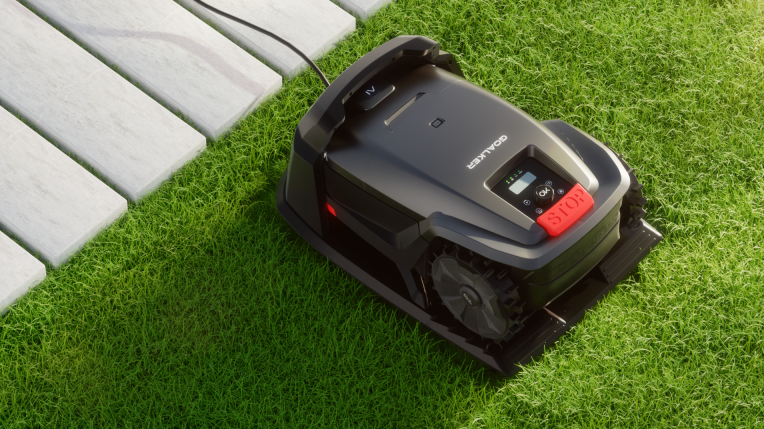
Not all robot mowers cut grass the same way, and that difference matters more than most buyers realize. Two dominant technologies—rotary blades and blade discs—shape everything from cutting precision to how often you'll be replacing parts. Choose the wrong system for your lawn's terrain, grass type, or size, and you might end up with uneven cuts, frequent blade wear, or maintenance headaches you didn't sign up for.
This guide breaks down how each cutting mechanism operates under the hood, comparing rotary blade vs blade disc mower systems across performance, durability, and safety. Whether you're weighing your first robotic mower purchase or troubleshooting a current unit that's losing its edge, you'll walk away knowing which cutting technology actually fits your lawn—and why the difference between disc blade vs rotary blade mowers shapes your yard's results every single week.
How Rotary Blade Cutting Systems Work
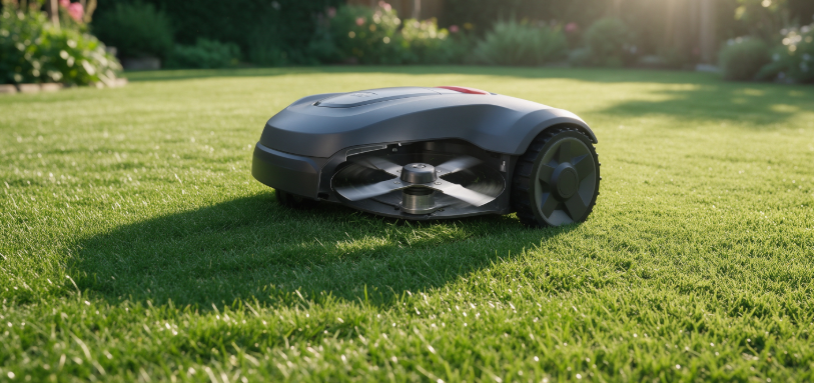
Every rotary blade mower has a spinning metal blade or set of blades that cuts grass through impact. As the blade spins at high speed, it generates airflow that lifts grass blades upright before slicing through them. This "strike and cut" mechanism is different from disc-based systems, which is why rotary blades excel in certain conditions and struggle in others.
The Physics Behind the Cut
Blade tip speed determines cutting performance in rotary systems. Most rotary mowers cap out around 19,000 feet per minute (roughly 216 mph) at the blade tip, a safety and design standard that governs how fast the blade can spin based on its length. For example, an 18-inch blade might run near 4,031 RPM. A 26-inch blade drops to around 2,903 RPM to stay within that same tip-speed threshold.
In practice, rotary mowers idle at 3,200–3,600 RPM, dip to about 3,000 RPM during active cutting, and can fall as low as 2,500 RPM under heavy load while still functioning. Agricultural-grade rotary discs often operate at higher velocities, typically 71–84 meters per second. Some tested configurations run 750–1,000 RPM (roughly 79–105 m/s) for optimal results.
Blade Design and Material Choices
Most robotic mower blade types in this category use steel construction, often featuring serrated or triangular tooth patterns to improve grip and cutting efficiency on tougher grass. Serrated-edge triangular blades consistently outperform smooth-edged designs. Blade geometry matters as much as speed.
Best-Fit Conditions
Rotary systems thrive in tall grass, dense turf, weeds, and light brush, where their impact-based cutting handles rough, inconsistent vegetation well. However, performance drops with wet grass or overly dense growth because airflow lift weakens, leading to clumping and uneven discharge. Matching forward speed to blade RPM (1 m/s paired with 886 RPM yields strong results) is essential for consistent cutting quality across uneven terrain.
How Blade Disc Cutting Systems Work
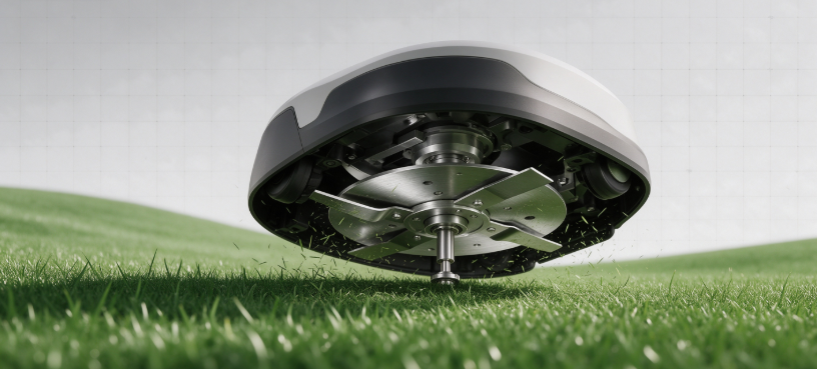
Blade disc systems take a different approach to cutting grass. Instead of impact-based slicing, these systems use a rotating disc fitted with multiple small blades that spin continuously to create a full 360-degree cutting path. That's the core difference in the disc blade vs rotary blade mower debate: one strikes grass with force, the other shears it through constant rotational contact.
Speed, Cutting Width, and Height
Robotic mower blade discs typically spin around 2,500 RPM, generating a consistent circular cutting motion. Standard robot mower cutting width for disc systems often measures around 17 cm, with robot mower cutting height ranging between 2–5 cm.
Best-Fit Lawn Scenarios
Disc systems shine on regularly maintained lawns rather than overgrown terrain. Compact robotic mowers using this technology typically cover ¼ acre to ½ acre properties, making them ideal for consistent, smaller-scale mowing rather than infrequent heavy-duty cutting.
Rotary Vs Blade Disc: Key Performance Comparison
Numbers tell the real story when it comes to rotary blade vs blade disc mower performance. Testing data reveals clear gaps in cutting precision, obstacle handling, maintenance demands, and energy use—gaps that directly affect which system fits your lawn.
Cutting Precision and Lawn Uniformity
Blade disc systems consistently deliver cleaner, finer cuts than rotary blade mowers. That's expected given their multi-blade layout and constant rotational contact. Real-world testing backs this up:
Dual three-disc models score around 7/10 for cutting quality, though roughly 10% of grass blades go uncut
Dual six-disc configurations push that rating to 8/10
Offset three-disc setups hit 8.5/10, with testers noting "almost no missed grass"
The pattern is clear: disc count and blade layout—especially offset or multi-blade arrangements—directly control how even your lawn looks after each pass. Rotary cutters, built for rougher clearing work, simply can't match this level of finish.
Obstacle Tolerance and Impact Protection
Rotary cutters typically use blunt, hinged blades designed to swing away on impact. They're built to plow through brush, weeds, and small debris up to roughly 2.5 cm thick—ideal for rocky, overgrown terrain.
Blade disc systems handle obstacles differently. Their free-swing blades fold backward when striking rocks or hard objects, reducing fracture risk without sacrificing cutting speed. The tradeoff: disc mowers prioritize cutting efficiency with lower impact damage; rotary cutters prioritize impact resistance and clearing power.
Maintenance Frequency and Wear Patterns
Disc mower blades typically need replacement every 100–200 hectares of use, depending on conditions. Multi-disc systems also demand more attention to bearings and drivetrain lubrication—more moving parts means more precision maintenance. Rotary cutters, by contrast, use simpler mechanics but still wear faster under heavy impact loads.
Energy Consumption Differences
Energy testing shows real gaps between cutting mechanisms:
Cutting Type | Energy Use (MJ/ha) |
|---|---|
Drum type | 187.88 (lowest) |
Rotary disc type | 284.85 (highest) |
Disc systems typically run 2,500–3,500 RPM, delivering higher throughput but consuming more energy. Better disc design reduces missed grass, cutting down on repeat passes—partially offsetting that energy cost through efficiency gains elsewhere.

How to Choose the Right Cutting System for Your Lawn
Lawn size and terrain settle most of this decision before price ever enters the picture. Small, flat lawns under 5,000 sq ft with grass kept under 2 inches favor precision-cutting systems like blade discs—their scissor-style, multi-blade contact mirrors what fine, closely maintained turf needs. Large, irregular, sloped, or rocky properties, especially anything with grades above 15 degrees, push you toward rotary blade systems instead, since their impact-based cutting handles rough ground and taller grass without stalling.
Grass Type and Growth Habits
Coarse, dense, or overgrown grass punishes disc systems designed for clean, frequent cuts. Rotary blades tolerate that toughness better. If your lawn regularly grows past the 2-inch mark between mows, rotary is the safer long-term pick.
How Often You Actually Mow
Frequency changes the calculus. Mowing every 3–5 days keeps grass short enough for disc systems to shine. Less frequent, lower-maintenance mowing schedules suit rotary blade setups, which tolerate inconsistency without demanding constant precision upkeep.
Budget and Ownership Costs
Upfront pricing varies widely—rotary-based robot mowers span roughly $110–$6,000 depending on class, while disc-based models often carry higher precision-related costs. Maintenance tells the fuller story: light-use blade sharpening runs $10–$30 annually in DIY scenarios, or $60–$80 professionally, while rotary systems typically cost $50–$150/year in upkeep. Over three years, that gap compounds—so calculate total ownership cost, not just sticker price, before deciding.
Maintenance and Blade Replacement Guide
A dull blade doesn't just cut grass poorly—it stresses the entire drivetrain. Knowing when and how to service your cutting system keeps performance sharp and prevents costly downstream damage.
When to Replace Blades
Most robot mower blades last 1–2 years or roughly 20–25 operating hours before wear outpaces sharpness, though visual condition should always override the calendar. Watch for these direct replacement signals:
Rounded or dull edges that no longer slice cleanly
Nicks, chips, or cracks along the cutting surface
Warping or bending in the blade body
Burrs, roughness, or burn marks on cut grass tips
Thickness loss below 40% of the original spec
Disc System Maintenance Steps
For blade disc cutting systems, remove old blades and washers first. Reinstall new blades with washers spaced to manufacturer gap requirements, checking that mounting holes align and cutting edges face the correct rotational direction. Tighten bolts to specified torque—loose fasteners cause vibration, rattling, and eventual blade loss. Clear grass buildup around the disc base and blade sockets regularly; trapped debris hides developing cracks and disrupts balance.
Rotary System Maintenance Steps
Rotary blade vs blade disc mower upkeep differs here: inspect each rotary blade individually for bending, nicks, cracks, or rounded edges before clearing debris from the blade housing. If vibration or noise increases after a swap, suspect uneven blade weight—replace blades in matched sets, not individually, and rebalance.
Practical tip: Clean cutting surfaces after every use in heavy conditions, store removed blades dry and rust-free, and log thickness measurements to predict your next replacement window accurately.

Product Spotlight: Hybrid & Dual-System Options
Not every lawn works with just a rotary or disc mower. Seasonal changes in grass height, shaded spots, sloped edges, and uneven terrain push some owners toward hybrid systems that switch cutting or power strategies depending on conditions.
SmartMowBot's Adaptive Cutting Approach
SmartMowBot takes a different hybrid angle, combining LiDAR, RTK, and vision-based positioning to deliver boundary accuracy of ±1 cm. That precision matters most on complex lawns with shifting edges, tree shadows, or narrow passages where wire-free navigation typically struggles.
FAQ: Common Questions About Robot Mower Cutting Systems
Buyers keep circling back to the same handful of questions. Here are direct answers.
How often should robot mower blade replacement happen?
Light home use: 3–6 weeks
Moderate use: 6–8 weeks
Hour-based tracking: 80 hours
High-durability setups: 50 hours (flip) / 150 hours (replace)
Replace early if you notice white grass tips, frayed cuts, or louder operation.