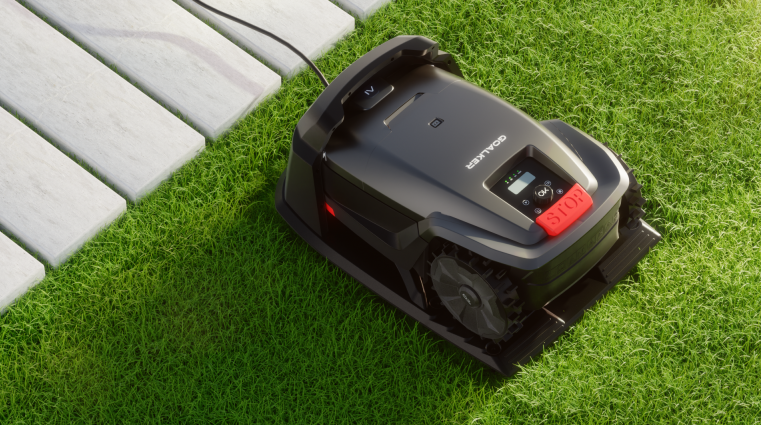
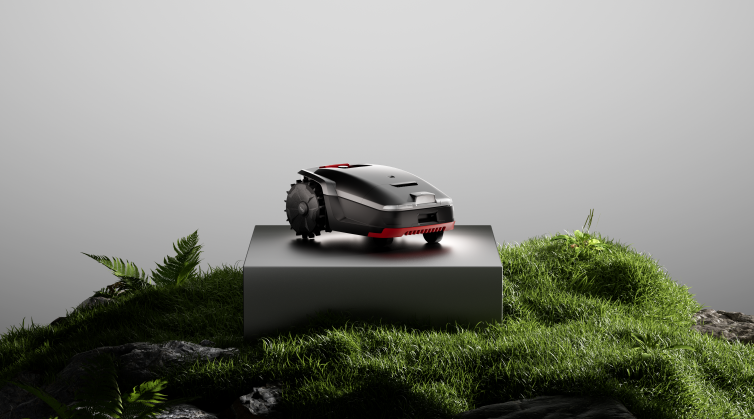
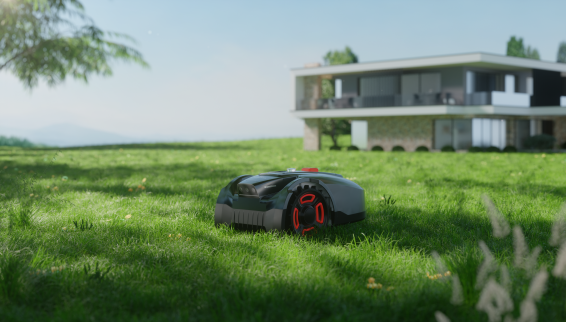
That strip of shaggy grass hugging your fence line or flower bed is physics. Every robot mower has to get a spinning blade close enough to a boundary without the wheels crashing into it. Edge cutting technology is how they do it, and once you see how it works, those uncut strips along your borders make a lot more sense. Some robot mowers use clever offset cutting discs, others rely on wheel design or sensor-guided precision. Those differences can make or break your edge-trimming results.
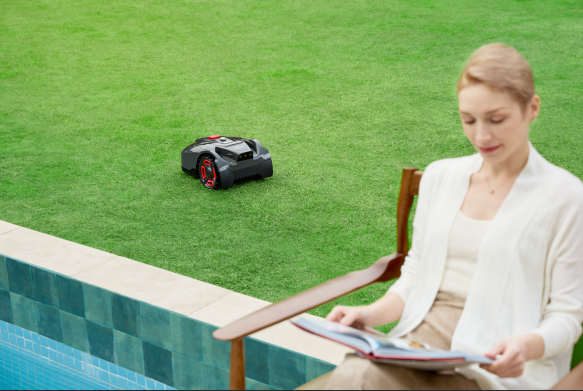
Robot Lawn Mower Edge Cutting: A Detailed Explanation of the Core Working Principle
The math behind edge cutting comes down to three fixed variables: blade radius, body footprint, and wheelbase. These three create a safety gap no cutting disc can fully eliminate, and understanding that gap explains almost every edge-mowing complaint you'll find online.
Why That Uncut Strip Exists
The cutting blade sits inside the machine's outer shell for a reason. If the blade extended all the way to the edge of the housing, every bump against a wall, fence post, or garden border would risk damaging the blade or the obstacle. So manufacturers build in a buffer zone.
Standard center-mounted disc mowers leave a noticeable gap:
- Uncut strip width: roughly 10-20 cm along any hard boundary
- The blade sits dead-center under the chassis, so wherever the wheels stop, the cutting circle stops even further back
Models with dedicated edge-cutting technology shrink that gap:
- Uncut strip width drops to about 5-6 cm
- Some premium designs achieve a blade-to-edge distance of just 1.97 inches (roughly 5.0 cm)
Offset cutting disc mower design shifts the entire cutting circle closer to the wheel edge. This happens within the same safety constraints, just positioned more efficiently.
The Blade-to-Wheel Relationship
Robot mower wheel design matters more than most buyers realize. The cutting area always has to stay within the wheel/body footprint. Push it outside that boundary, and you increase the risk of the blade clipping obstacles, curbs, or even pedestrian feet.
How Movement Logic Affects Coverage
Robot mowers use a sweep-turn maneuver near boundaries — a small-radius arc that lets the outer edge of the disc sweep closer to the border than a straight pass ever could. Switching rotation direction changes which side of the disc "flares out," so the mower can favor whichever edge needs coverage.
Cutting reach = blade-center-to-boundary distance minus safety gap.
Center the disc, and that gap stays wide. Offset it, and the gap narrows, but it never hits zero.
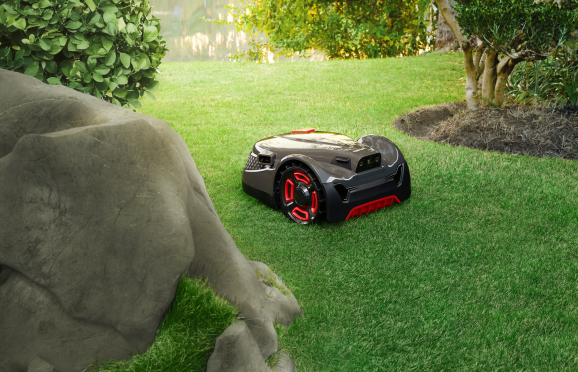
Mainstream Edge-Cutting Design Approaches Compared: Offset Blade vs Vision Tracking
Three engineering philosophies drive robot mower blade design today, and they solve the same problem in completely different ways. Which one works for you depends on what kind of border you're mowing.
Offset Blade: Simple, Cheap, Mechanical
Offset disc designs skip the computational overhead entirely. No cameras, no image processing, no boundary recognition software. That keeps costs down and maintenance simple. The downside shows up at tight corners, wall bases, and any border that isn't a clean hard edge. Soft borders — mulch beds, low plantings, dirt transitions — still usually need a manual trim pass afterward.
Dedicated Edge Mode: A Scheduled Detour
Nobody has published a solid benchmark for how much extra time this adds, but the pattern is consistent: the mower walks the boundary loop once or twice extra, separate from its normal coverage pattern. That means more turning, more repeated travel along the same line, and generally higher energy use per session. The payoff is fewer overgrown strips and less manual trimming afterward — you trade runtime for a cleaner finish.
Vision Tracking: Precision Over Mechanics
Camera-based boundary detection changes the equation entirely. Instead of compensating mechanically for a fixed disc position, the mower sees the edge and adjusts in real time. Published research backs this up with real numbers: one vision-based method tested across 12 lawn images achieved centimeter-level accuracy, and a separate boundary-detection trial ran 120 boundary-approach tests with only 2 crossings — a 98.3% success rate.
That's a meaningful upgrade over boundary wire systems, which rely on pre-buried cable and mechanical distance thresholds. Vision tracking removes the wiring dependency and reads the actual edge, which matters a lot on lawns with curves, irregular borders, or seasonal landscaping changes. The catch: performance depends on lighting conditions, surface texture, and algorithm stability. Sunny days and consistent grass color help; shadows and worn turf don't.
Design | Edge Gap | Best For | Tradeoff |
|---|---|---|---|
Offset Blade | ~4.5–5 cm | Hard, straight borders | Weak on soft/irregular edges |
Dedicated Edge Mode | ~1.77 in / 45 mm | Mixed boundaries | Longer runtime, more energy |
Vision Tracking | Centimeter-level | Wire-free, irregular lawns | Sensitive to light/texture |
If budget and simplicity matter most, offset blade designs deliver reliable results on straightforward yards. If your border geometry is more complex, dedicated edge modes or vision-guided systems — the kind smartmowbot.com's newer models are built around — close the gap that mechanical offset alone can't.
Frequently Asked Questions Quick Answers (Robot Mower Edge Cutting FAQ)
Five questions come up again and again in mower forums and support tickets. They all trace back to boundary wire depth and disc positioning. Here's what the data says.
Q: How deep should I bury the boundary wire?
A: 4–5 cm is the sweet spot most manufacturers recommend, though the safe working range runs from 3–7 cm. Go shallower than that, and aerating tools, dethatchers, or edging shears will slice right through the cable. Bury it deeper than the recommended range, and signal strength drops enough to confuse boundary recognition, which shows up as erratic edge behavior or the mower stopping short of the actual border. Check your [robot mower boundary setup] guide for model-specific depth limits before you dig.
Q: Does the wire have to go underground at all?
A: Not always. Several models support surface-laying, where the cable sits on top of the lawn and disappears into the grass within a couple of weeks. If you do bury it permanently, common upper limits are 5 cm or 7 cm, depending on the brand's own spec sheet.
Q: How close can the mower get to a wall?
A: Most units leave a residual strip somewhere between 3 cm and 15 cm along hard boundaries. Where you land in that range depends on three things: whether the disc is offset, how wide the chassis is, and whether the machine has a dedicated edge mode running. Center-disc models leave 8–15 cm uncut. Offset-disc designs compress that down to 5–10 cm.
Q: When do I still need to trim by hand?
A: Hard boundaries are the usual culprit — especially wall corners, fence bases, and stone edging on center-disc machines. Offset discs or dedicated EdgeCut-style systems cut that manual trimming frequency down noticeably, sometimes to the point where you touch up once a season instead of every mowing cycle.
Q: Should I test-run before permanently installing the wire?
A: Yes, and skipping this step causes most of the "my edges are terrible" complaints. Run the mower on a surface-laid wire for 2–3 weeks first. Confirm turning behavior, docking, and edge recognition are all working before you commit to a fixed installation. Once you're happy with performance, that's the point to lock in your [robot mower boundary setup] permanently.
Quick Reference
The best wire depth is 4–5 cm (safe range 3–7 cm). Surface-laying works short-term; test for 2–3 weeks before burying. The hard-edge residual strip is 3–15 cm, with offset discs trending lower. EdgeCut-style features cut manual trimming needs significantly. Checkerboard or triangular paths cover edges better than single-direction parallel passes. Switch patterns if your borders still look ragged after a full week of runs.