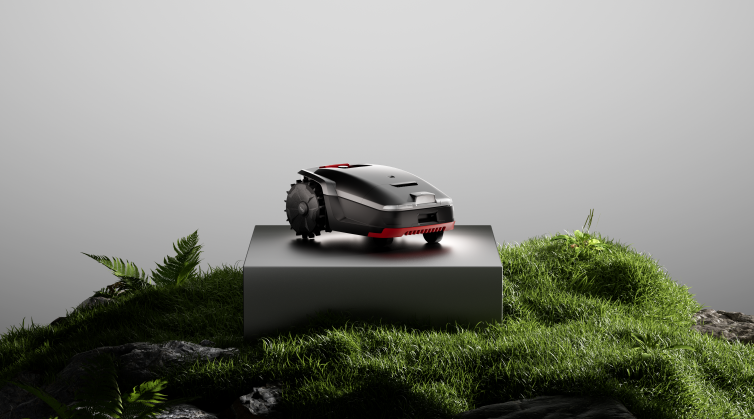
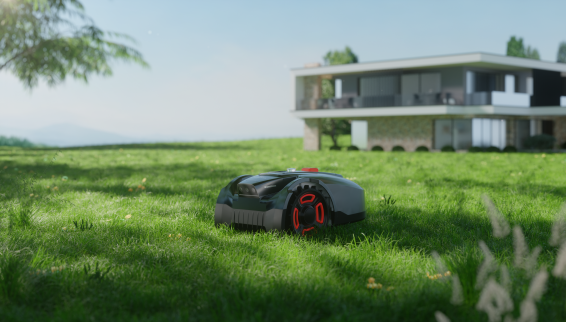
If you've ever compared robot mowers side by side and wondered why some cost significantly more than others despite looking nearly identical, the answer is often hidden inside the housing: the motor. A brushless DC motor is the single component that determines whether your mower runs for years without a hiccup or needs repairs within its first season. It affects everything from how long your mower lasts on a single charge to how much noise it makes while cutting at 7 a.m. Before you buy the next robotic lawn mower deal on sale, it's worth understanding what's actually spinning under the hood and why that mechanism might be the smartest quality indicator you're not checking yet.
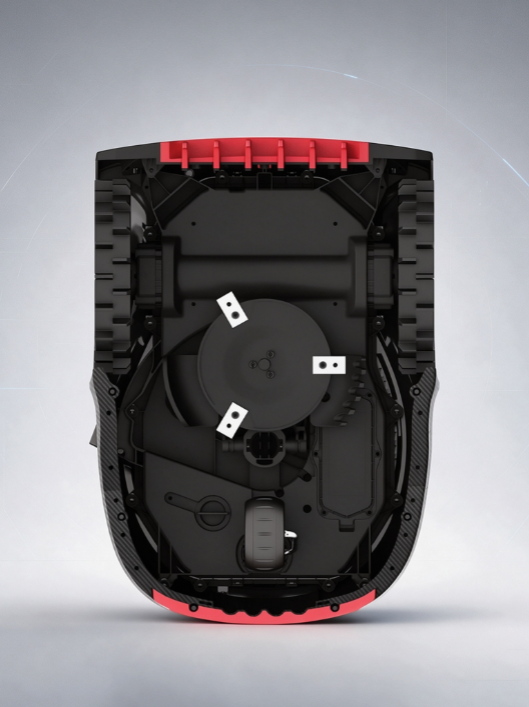
What Is a Brushless Motor (BLDC) and How Does It Work in Robot Mowers
A brushless DC motor is a permanent magnet synchronous motor that swaps mechanical brushes for electronic commutation. That's the entire engineering distinction. No brushes, no commutator contact, no friction wearing down over time.
The structural difference in plain terms:
Brushed motor: battery → brushes/commutator → rotating coil winding → motion. The coil spins, and physical brushes feed it electricity through constant contact.
BLDC motor: battery → controller (ESC) → stationary stator coils fire in sequence → rotating magnetic field forms → permanent magnet rotor follows. Nothing physically touches to transfer power.
The controller does the heavy lifting here. It tracks rotor position and switches the three-phase windings in the correct order — typically using six-step trapezoidal commutation, where each electrical cycle runs through six discrete states, with two phases energized at any given moment. The rotor itself carries rare-earth permanent magnets, usually neodymium iron boron (NdFeB), which chase the stator's rotating magnetic field to generate torque.
Where BLDC Motors Work Inside a Robot Mower
Two components rely on this technology most heavily:
Blade motor: spins at high RPM, so it's most sensitive to efficiency, speed stability, noise, and heat buildup. BLDC's electronic switching handles sustained high-speed operation far better than brushes ever could.
Wheel drive motor: handles self-propulsion, slope climbing, and path control, demanding precise low-speed torque and frequent start-stop cycles. Because BLDC motors respond directly to controller commands, they deliver finer speed control during constant direction changes.
Both parts face variable loads. Grass resistance shifts constantly, terrain changes underfoot, and BLDC's electronic control adapts to that instability without the wear penalty brushed systems accumulate.
Longer Runtime & Higher Efficiency: The Battery Life Advantage
Numbers tell the story better than marketing copy ever could. Brushed motors typically convert 75–80% of input power into actual cutting work, while brushless DC motors hit 85–90% efficiency, with some peaking near 95%. That gap directly shapes how often your robot mower needs to dock and recharge.
Where the lost energy goes:
Brushed motors waste roughly 15–20% of energy as heat and friction from constant brush contact.
Brushless motors cut that loss to about 5–10%, essentially halving thermal waste.
Less heat means less energy burned for nothing, and that energy gets redirected into runtime.
What This Means for Mowing Time
Benchmark testing shows brushless motors deliver 25–30% longer runtime than brushed equivalents under identical conditions. In controlled comparisons using the same 5.0Ah battery, a brushed setup lasting 35 minutes stretched to 45–50 minutes with a brushless motor. No battery upgrade required, just better energy conversion.
This matters most if you're mowing a large lawn. Small yards often finish in one session regardless of motor type. Larger properties, though, are where efficiency separates one charge cycle from two or three per mowing day.
Efficiency also affects coverage. One tested robot mower used just 3.1 Wh/m², compared to an industry median of 4.8 Wh/m², meaning it covered noticeably more lawn per unit of stored energy. That's a direct result of brushless motor design working alongside smarter power management.
Smart Torque Adjustment: Performance in Thick or Wet Grass
Grass conditions change from one corner of the yard to the next, and that's where brushless motors prove their worth. The controller inside a brushless DC motor senses cutting resistance and adjusts torque and speed in real time, ramping up power the moment it hits dense, tall, or damp turf.
How the load response works:
In light, thin grass, the motor pulls less current, conserving battery and reducing unnecessary wear.
In thick or wet patches — clumps of damp fescue, St. Augustine, or overgrown weeds — the controller surges power automatically, keeping blade speed steady instead of letting it drop.
EGO's LM2110 shows this: its manual lists up to 6.0 ft-lbs of cutting torque designed to "power through various grass conditions" without stalling mid-pass.
Where Brushed Motors Fall Behind
A brushed motor doesn't have this adaptive intelligence. Hit a patch of thick, damp fescue, and it often bogs down or stalls outright, forcing a second pass or a manual mode switch. Brushless systems skip that step — no user intervention, no repeated cutting, just automatic compensation.
This is also why the efficiency numbers hold up under real stress: 85–90% brushless efficiency versus 75–80% for brushed translates into 20–30% longer cutting time even when the terrain isn't cooperating. That said, wet grass still isn't ideal for any mower — it can clog the deck regardless of motor type, so mowing after dew has dried remains good practice.
Quieter Operation: Why Noise Level Matters for Daily Use
Sound levels rarely make it onto a shopping checklist, yet they shape whether a robot mower gets used at 6 a.m. without a neighbor complaint. Motor type is the deciding factor. Brushed DC gearmotors run 55–75 dB(A), while brushless DC gearmotors sit at 45–65 dB(A) — a 6–10 dB(A) drop measured at one meter. That gap sounds small on paper, but human hearing perceives a 10 dB reduction as half as loud. So a brushed unit at 75 dB feels twice as noisy as a brushless model at 65–68 dB.
Where This Matters Most
Early or late mowing: sub-60 dB units let you run cutting cycles before work or after dinner without disturbing anyone.
HOA and shared-fence neighborhoods: models around 57–58 dB fit noise-sensitive communities far better than 70+ dB alternatives.
Comparison to gas mowers: traditional walk-behind models hit 90–105 dB, so even a mid-60s brushless robot mower is 25–50 dB quieter — a different experience for anyone nearby.
Lower Maintenance & Longer Lifespan: The Long-Term Value Proposition
Motor lifespan is where the price gap between robot mowers finally makes sense. A brushless DC motor typically runs for 10,000 hours before wearing out, while brushed motors max out around 5,000–7,500 hours. Premium brushless units push even further, hitting 20,000+ hours, whereas budget brushed motors can fail after just 1,000–5,000 hours once carbon brushes wear through.
Translate that into real-world years and the gap widens. Mowing 500 hours a year (a typical suburban schedule), a brushless motor lasts about 20 years. A brushed motor covers 10–15 years in the same scenario. At lighter use — 250 hours annually — brushless stretches to 40 years, while brushed tops out around 20–30 years.
Why Brushed Motors Cost More Over Time
Carbon brushes are consumable parts. They wear down through constant contact with the commutator, and eventually need replacing. Industry pricing puts a typical brush replacement service at $20–$80 per event for consumer-grade equipment — sometimes higher if the whole motor needs swapping instead.
Brushless motors skip this cycle entirely. No brushes means no scheduled replacement, no labor cost, no downtime waiting on parts. Wear shifts almost entirely to bearings, which last far longer under normal load.
That's the real value proposition: fewer wear parts, longer service intervals, lower total cost of ownership. A brushless motor isn't just quieter and more efficient — it's the cheaper mower to own five years in, once brush replacements start adding up on the brushed alternative.
Brushless vs Brushed Motor: Complete Comparison for Buyers
Sticker price tells half the story. Here's the rest.
Factor | Brushed Motor Mower | Brushless Motor Mower | What It Means for You |
|---|---|---|---|
Upfront cost | $100–$200, common on entry models | $150–$250, standard for comparable tiers | Brushless runs 30–60% higher at purchase |
Long-term maintenance | Requires periodic brush replacement | Almost no motor upkeep — just blades, cleaning, battery | Brushless cuts recurring repair visits |
Noise level | Louder, friction-driven contact noise | Quieter, better for tight neighborhoods | Brushless wins for early/late mowing |
Torque under load | Fixed output, stalls in thick or wet grass | Auto-adjusts torque electronically | Brushless handles dense lawns without bogging down |
Lifespan | 1,000–7,500 hours depending on build quality | 10,000–20,000+ hours | |
Runtime/efficiency | More energy lost to heat, shorter runtime | 85–90% efficient, 20–30% longer runtime | Same battery, more coverage per charge |
Best lawn type | Small, simple, budget-conscious setups | Mid-to-large lawns, thick or tall grass | Match motor type to your yard's actual demands |
Does the Extra Cost Pay for Itself?
The math depends on how much you mow. Brushless models cost $50–$100 more upfront, but that gap often disappears fast:
One brush replacement or motor repair on a brushed unit can equal or exceed that price difference on its own.
Heavy users — large lawns, frequent cycles, tall or damp grass — usually see brushless pay off within 2–4 years through longer lifespan and better efficiency.
Light users with small, simple lawns may never rack up enough wear to justify the premium.
Small lawn, tight budget — brushed works fine. Large lawn, complex grass conditions, low-maintenance priority — brushless earns its price tag.
How to Verify Motor Type Before Buying: A Practical Checklist
Marketing copy lies through omission more than outright deception. "High-efficiency motor" and "advanced motor technology" sound impressive but mean nothing without the word brushless, BLDC, or PMSM printed somewhere.
Where to check:
Spec sheets and datasheets: look for "brushless DC motor," "3-phase brushless motor," or "PMSM"
Product FAQs and manuals: legitimate brushless mowers confirm it works "without brushes"
Driver/controller specs: BLDC pairs with an inverter or motor driver — brushed motors don't need one
Red flags that signal vague or brushed motors:
Terms like "quiet motor" or "powerful drive" with zero mention of brushless/BLDC
No rated voltage, torque, or speed listed anywhere
Cross-check the model number against its official datasheet if page wording seems inconsistent
Still unsure? Ask the seller directly: "Is this motor BLDC, PMSM, or brushed? Please confirm it's brushless and provide the driver specification."
SmartMowBot's Brushless Motor System: What Sets It Apart
The Mowbot "Midnight Black 800sq/m" — shows the category standard: a brushless motor with a 28V 2.5Ah battery, delivering about 60 minutes of runtime, 20° slope climbing, all packed into a 9 kg frame with a 2-year domestic warranty. That's useful since SmartMowBot sits in the same compact robotic mower class.
Another comparable platform, BAS Turf SmartMow, lists "Motors: Brushless DC" in its spec sheet. Brushless drive and cutting architecture is now the baseline for serious mid-tier mowers, not a premium add-on.
How SmartMowBot's Specs Stack Against Industry Benchmarks
Broader benchmark data for BLDC mower motors shows drive motors running 12–24V, 20–70 rpm rated speed, 1.0–5.0 N·m torque, and 2,000–5,000 hour lifespan. Larger cutting-focused BLDC systems push higher — 48V DC, over 1.5 kW continuous input, 3 kW peak output, 1,500–3,200 RPM, sealed at IP65.
SmartMowBot's brushless design fits this pattern: lower friction, higher efficiency, fewer wear parts. If you're evaluating it, check the motor label or datasheet for exact voltage and torque figures before buying.
FAQ: Common Questions About Brushless Motors in Robot Mowers
Before buying, most people ask the same few questions about motor type. Here are direct answers.
Are brushless motor robot mowers worth the extra cost?
Robot mowers range from $600 to $5,000+, with brushless models on the higher end. On a sloped or obstacle-heavy lawn where quiet, low-maintenance operation matters, the premium makes sense. On a flat, simple yard, it may not.
How long do brushless motors actually last?
Quality brushless units run 10,000–20,000 hours. At 1–2 hours of mowing per day, that's over a decade.
What's the biggest difference versus traditional mowers?
Robot mowers beat traditional ones on effort, noise, and maintenance. Traditional mowers win on upfront cost and handling tall, wet grass.
Are brushless robot mowers actually quiet?
Most run at about 60 dB — roughly the level of a conversation.